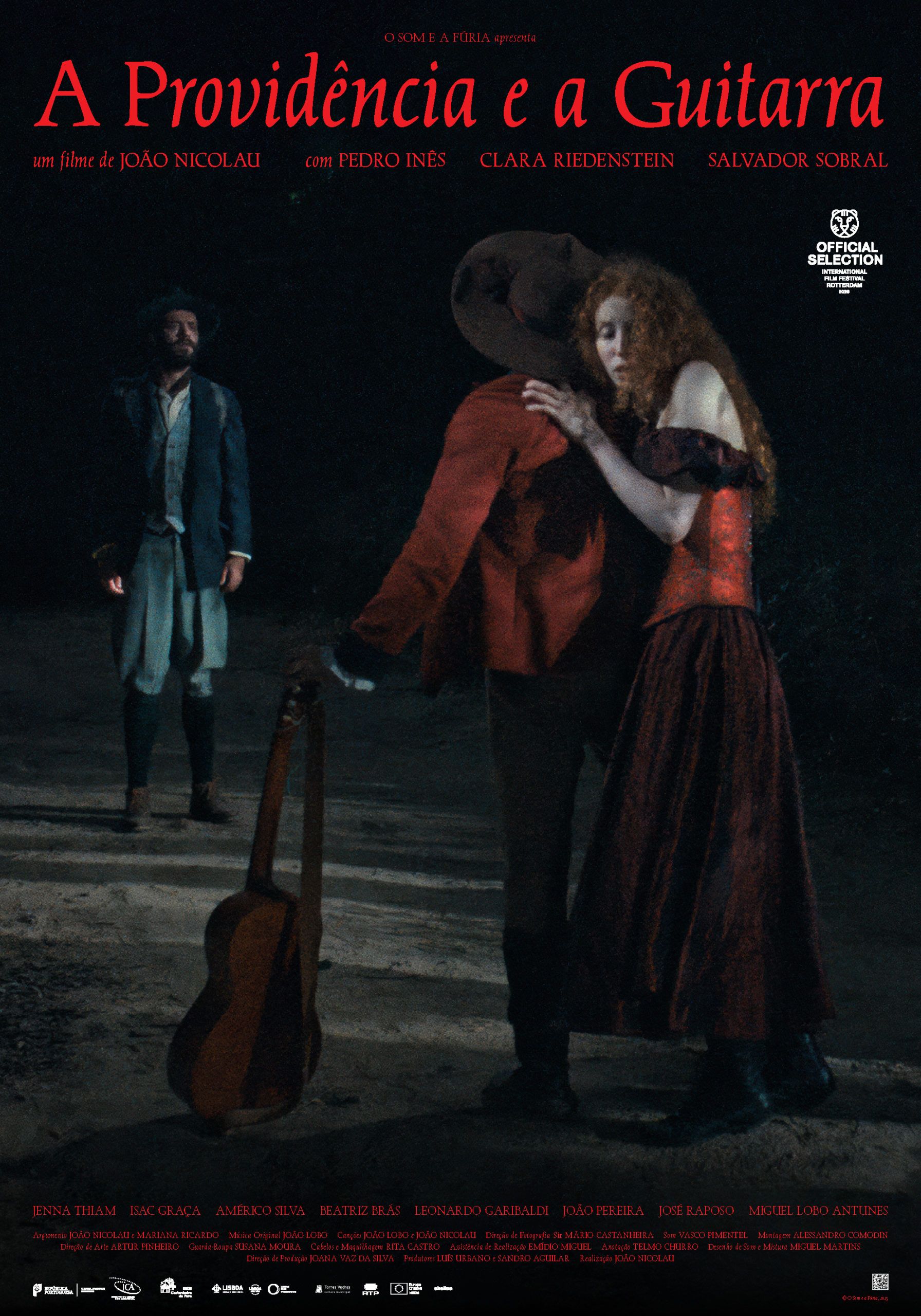
A PROVIDÊNCIA E A GUITARRA

PROVIDENCE AND THE GUITAR
3. OKTOBER | 19:30
Hiša filma Gorica / Kinemax
(O.V. pt, sub ita & eng)
Režija João Nicolau
125'
Portugalska
2026
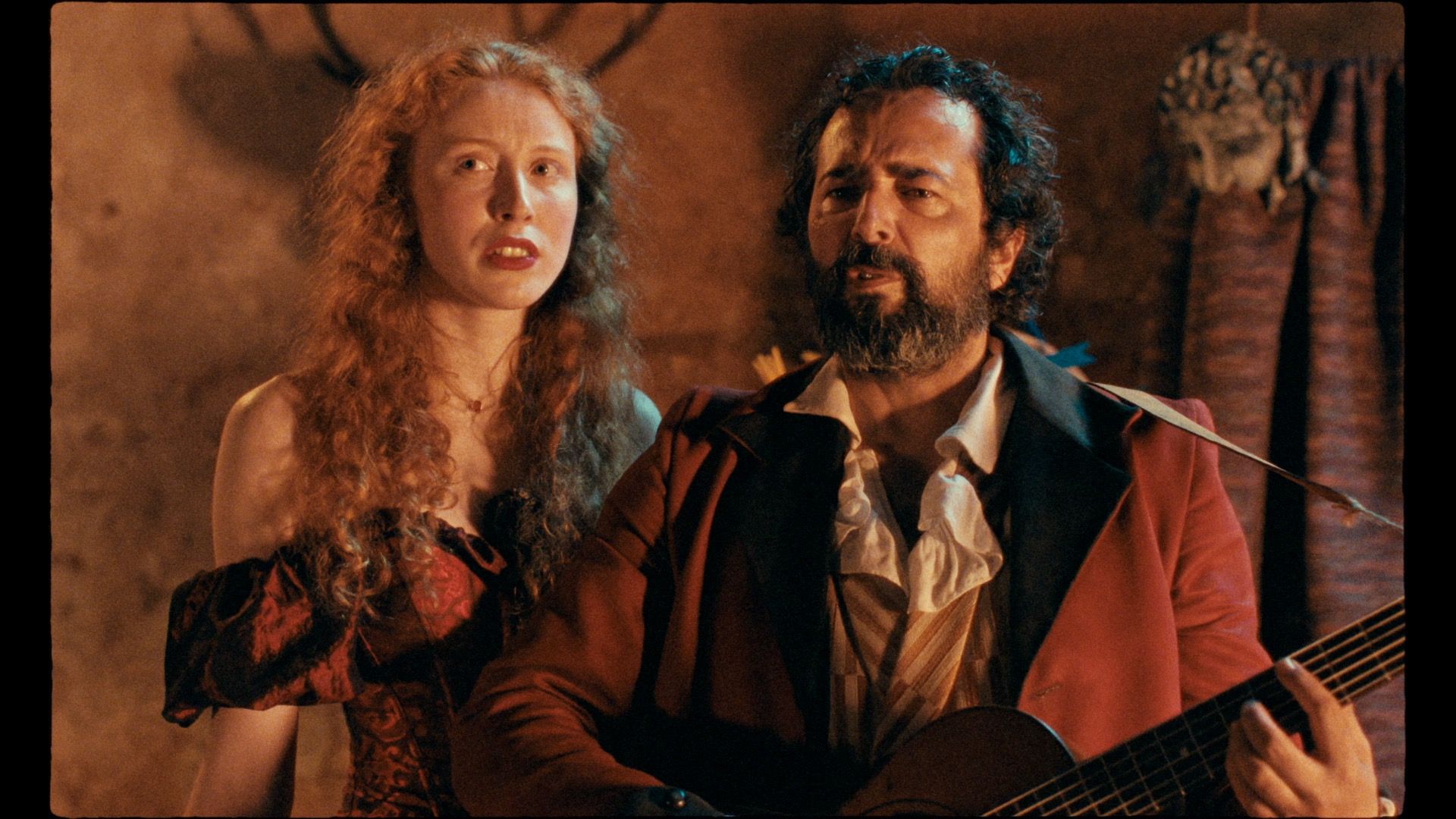
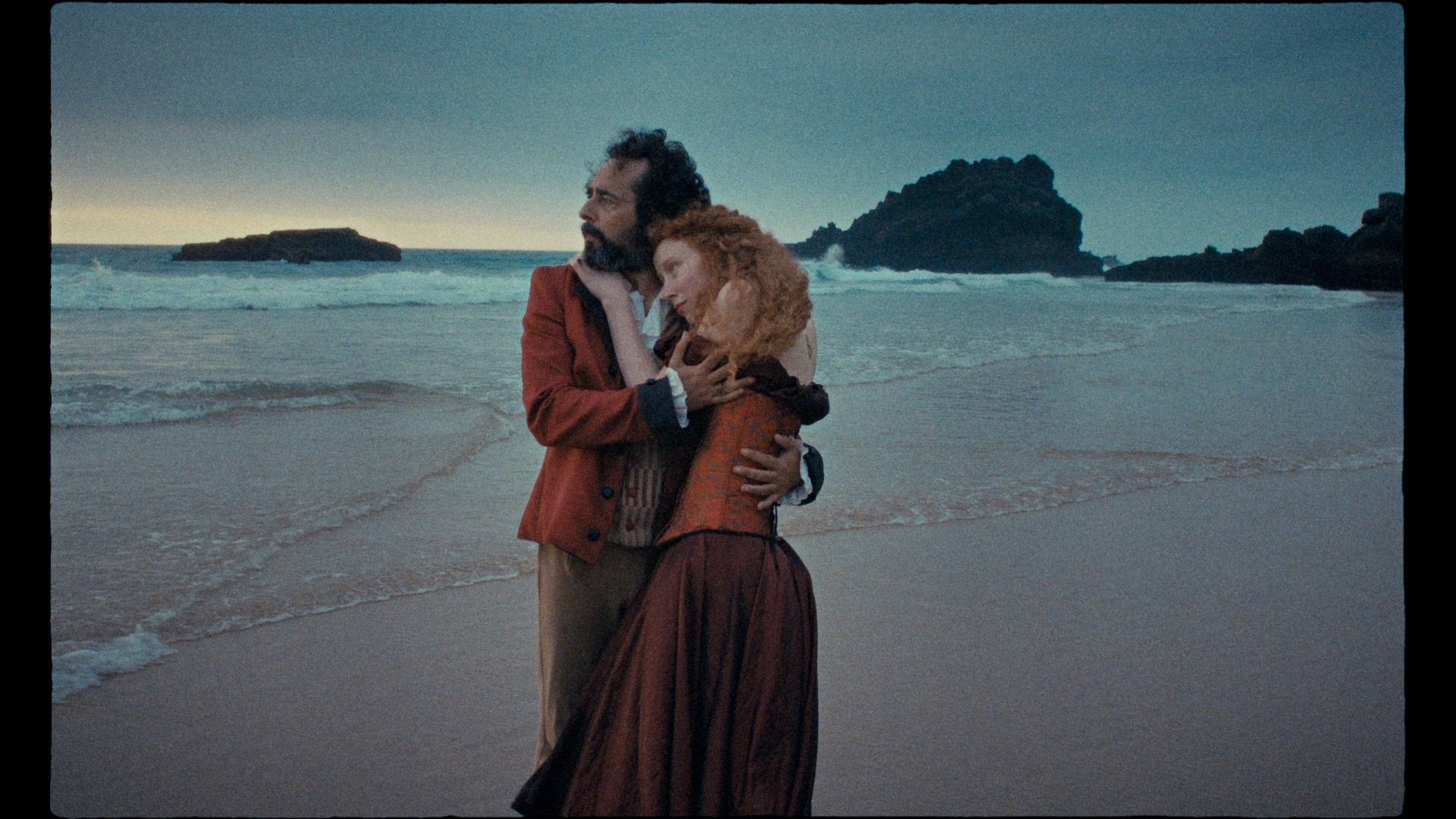
Zgodba se začne v davni preteklosti, kjer spoznamo Léona in Elviro Berthelini, potujoča umetnika, ki romata iz kraja v kraj. V Covarronci ju nadleguje policijski komisar, zato sta prisiljena prenočiti na prostem. Takrat spoznata Stubbsа, mladega študenta iz Cambridgea, s katerim najdeta zatočišče pri slikarju, ki je sprt s svojo ženo. V zahvalo za gostoljubje gostiteljema pokažeta, da ljubezen do umetnosti razrešuje tudi umetnost ljubezni. Medtem ju nenavadno prekletstvo popelje na absurdna potovanja v 21. stoletje, kjer sta ogrožena prihodnost socialne varnosti in prihodnost rockovske skupine.
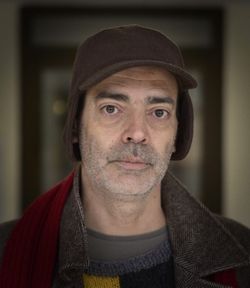
João Nicolau prihaja iz Portugalske. Je režiser, scenarist, montažer in glasbenik, v svojih filmih pa prepleta humor, glasbo, fantazijo in igriv odnos do filmske forme. V programu letošnjega festivala bo predstavil svoj novi film A Providência e a Guitarra in sodeloval tudi v pogovoru o svojem delu.
About the film:
João Nicolau (born in 1975) belongs to that generation of Portuguese filmmakers who grew up with João César Monteiro and Margarida Gil (he worked with both: he edited, for example, Vai e Vem, Monteiro’s final masterpiece). He has moved through cinema with a freedom of movement and fluidity that have led him to work as an actor with Eugène Green, among others, and as an editor on films by his friend Miguel Gomes and by Alessandro Comodin (who, in turn, edits Nicolau’s films), in a dynamic exchange of roles that testifies to a rather unique kind of cross-disciplinary communal vitality in these times, when fierce individualistic competition usually prevails and everyone tends to look after their own patch and their own name. In this sense, Nicolau is a counter-current spirit, little inclined towards self-assertion, the author of an exploratory cinema that is also in search of its own meaning: a non-consolatory, dialectical cinema in which actors are called upon to participate in the act of creation, in the construction of the film.
His latest work, A Providência e a Guitarra (Providence and the Guitar, 2026), inspired by Robert Louis Stevenson’s short story, is a mischievous apologue about the artistic vocation, the possibility of making a living from art, and the ways in which art can become part of both collective and individual life—a crucial question today if we are talking about independent culture. A Providência e a Guitarra has an open form, an open structure that allows it to continually reshuffle time, the past and the present, reversing and confusing them (so that, for instance, the present takes the form of a flashback). Nothing is explained, narratively speaking, about this present in relation to historical time. And the fact that it remains unexplained suggests that the characters, and the actors who bring them to life, function as phonemes (a variation on the “models” evoked by Robert Bresson in his Notes on the Cinematographer), and that the entire language of the film is composed of physical elements—bodies, places, objects—whose interweaving constitutes the dialectical force, beauty and poetry of such an eccentric work.
And yet his is, at heart, a simple cinema, in which mise-en-scène requires neither formal nor technological tricks. It needs truth; it knows how to inhabit the ambiguity of the questions that concern the present, collective life, and cinema in its most vital form.
Donatello Fumarola