

Festival closing: everything we cannot leave behind
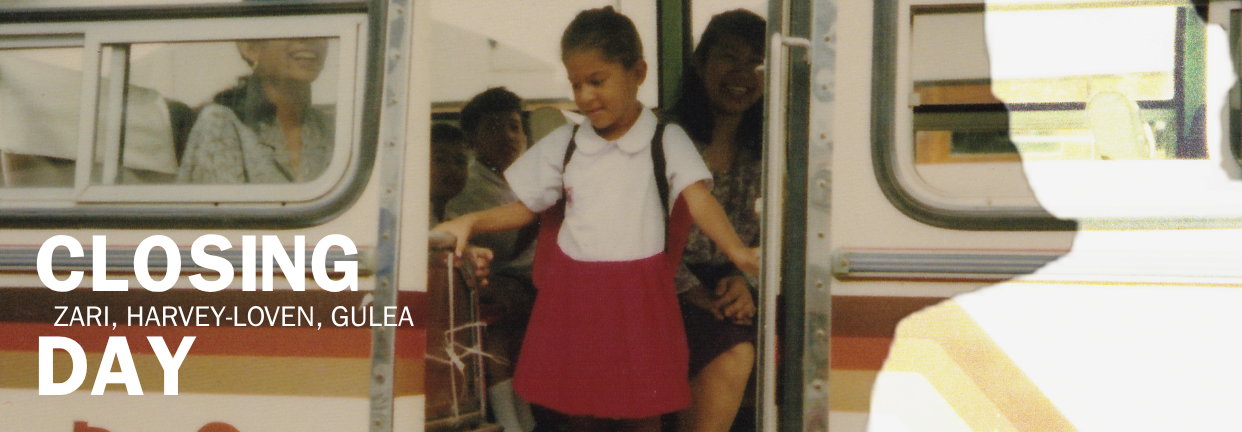
The final day of the festival brings together remarkably diverse films, united in their own distinct ways by the question of how the past inscribes itself into the present. In the first, history resonates through a fresh interpretation of a classical suite. In the second, history is audible as well—through the music of a new generation of Irish artists who are reclaiming and reshaping traditional folk. In the third, history lies hidden within a family story that the director has yet to uncover. We will thus conclude the festival with music, rebellion, and memory.
The film afternoon kicks off with Azi eram frumoasa, juna (Today I Was Young and Pretty) by Romanian director and this year’s Darko Bratina Award recipient, Alexandra Gulea. The film takes us behind the scenes of creating a classical suite inspired by Romanian folk music—from the initial rehearsals and studying the score to the moment the piece is first performed before an audience in France. Here, too, Gulea remains close to the people and the process: rather than focusing solely on the final performance, she observes the subtle shifts, relationships, and labor from which a work of art emerges.
A portrait of an Ireland seeking to reimagine tradition
The afternoon continues at EPICenter with Útóipe Cheilteac (Celtic Utopia), a musical and political documentary about a new generation of Irish musicians who take traditional folk into their own hands and reshape it in their own image. Their music is playful, rebellious, and melancholic all at once, opening up questions about a century of Irish social and political history and the lingering impacts of a colonial past. From their voices and music emerges a portrait of an Ireland striving to rethink and reclaim its tradition. Celtic Utopia is therefore both a musical and political documentary; a film about a generation finding its own language for the present through culture.
A personal search leading from Trieste to Bangkok
In the evening hours, the festival will draw to a close with White Lies by Italian director Alba Zari, which had its Slovenian premiere at the Kino Otok–Isola Cinema International Film Festival. When, at twenty-five, Alba learns that the man she believed to be her father all her life actually isn't, a personal quest begins—taking her from Trieste to Bangkok and deep into her family's hidden history. Her search opens broader questions about identity, belonging, silence, and what it means to grow up with a history you didn't choose. For Tribute to a Vision, it is also significant that this story returns to our local region: to the border between Italy and Slovenia, where personal history intertwines with the multi-layered history of the land. The festival thus closes with a story that is geographically close, yet uncovers distant and profound layers of memory.
From Gulea’s observation of music-making, through Irish music resisting inherited narratives, to a family secret that can no longer remain hidden—the closing day of Tribute to a Vision brings stories of how the past can return to the present and transform it.
Screenings: October 4, 2026 | EPICenter
15.00 | Azi eram frumoasa, juna (Today I Was Young and Pretty)
16.00 | Útóipe Cheilteac (Celtic Utopia)
19.00 | White Lies